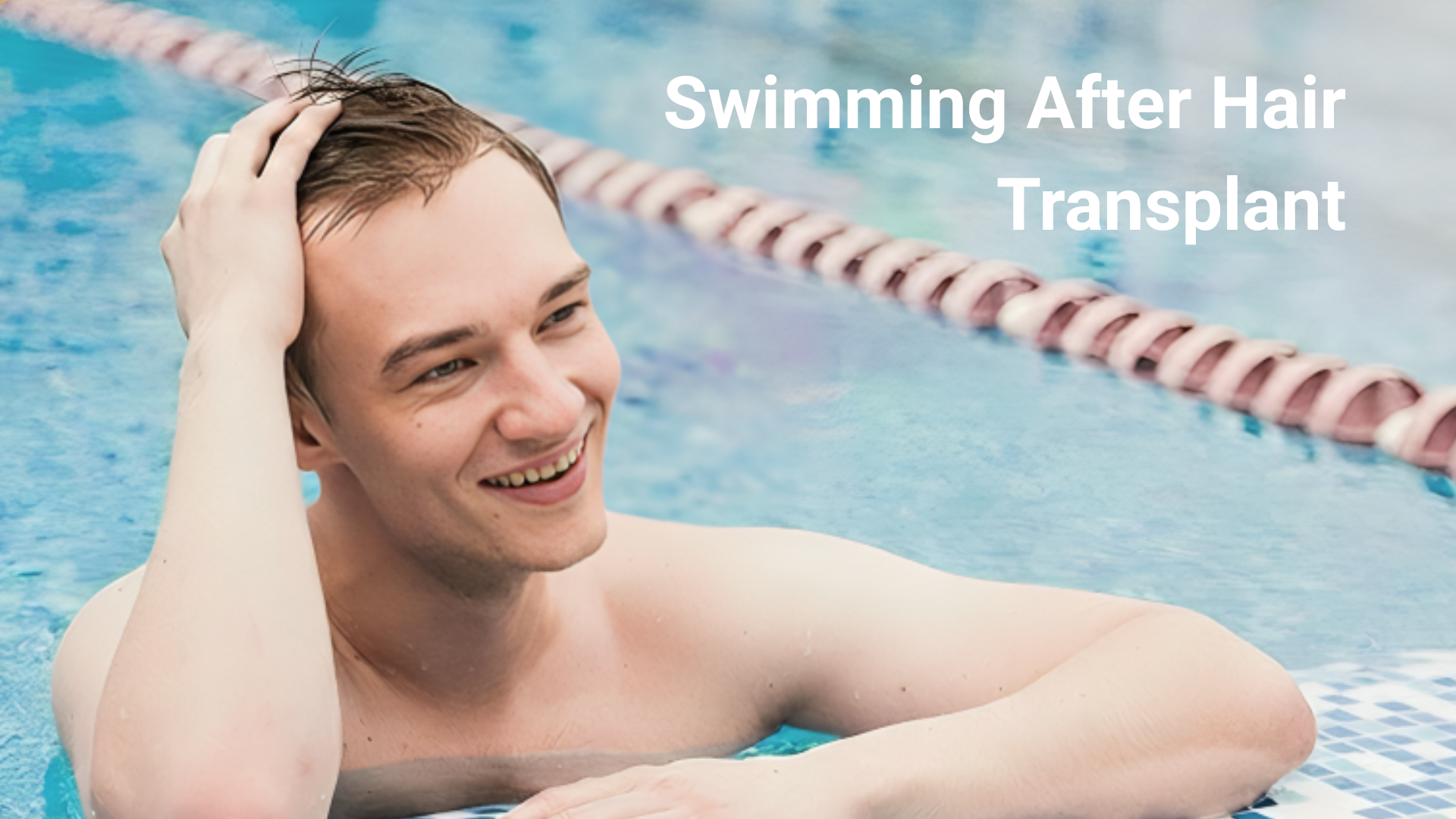
Swimming After Hair Transplant
When Is It Safe?
A hair transplant is a medical procedure, and the success of the treatment depends greatly on proper aftercare. One of the most common questions patients ask after surgery is:
“When can I go swimming after a hair transplant?”
Swimming too soon can damage newly transplanted hair grafts and increase the risk of infection. This guide explains when swimming is safe after a hair transplant, the risks involved, and how to protect your results.
- Why Swimming After Hair Transplant Needs Caution
- When Can You Go Swimming After a Hair Transplant?
- Swimming in a Pool After Hair Transplant
- Swimming in the Sea After Hair Transplant
- Swimming in Lakes or Rivers After Hair Transplant
- Can You Wear a Swimming Cap After Hair Transplant?
- What Happens If You Swim Too Early After Hair Transplant?
- Tips to Protect Your Hair Grafts When You Resume Swimming
- Does Swimming Affect Long-Term Hair Transplant Results?
- Hair Transplant Aftercare at Desai’s Skin, Hair & Laser Clinic
- Final Thoughts
Why Swimming After Hair Transplant Needs Caution
After a hair transplant, the grafts are extremely delicate. In the initial healing phase, they are still forming a blood supply and settling into the scalp, Dr. Desai’s Skin, Hair & Laser Clinic.
Swimming too early can cause:
- Dislodgement of hair grafts
- Scalp infections
- Irritation and inflammation
- Poor hair growth results
The main concerns are chlorine, salt, bacteria, water pressure, and friction, not just water itself.
When Can You Go Swimming After a Hair Transplant?
Swimming Timeline After Hair Transplant
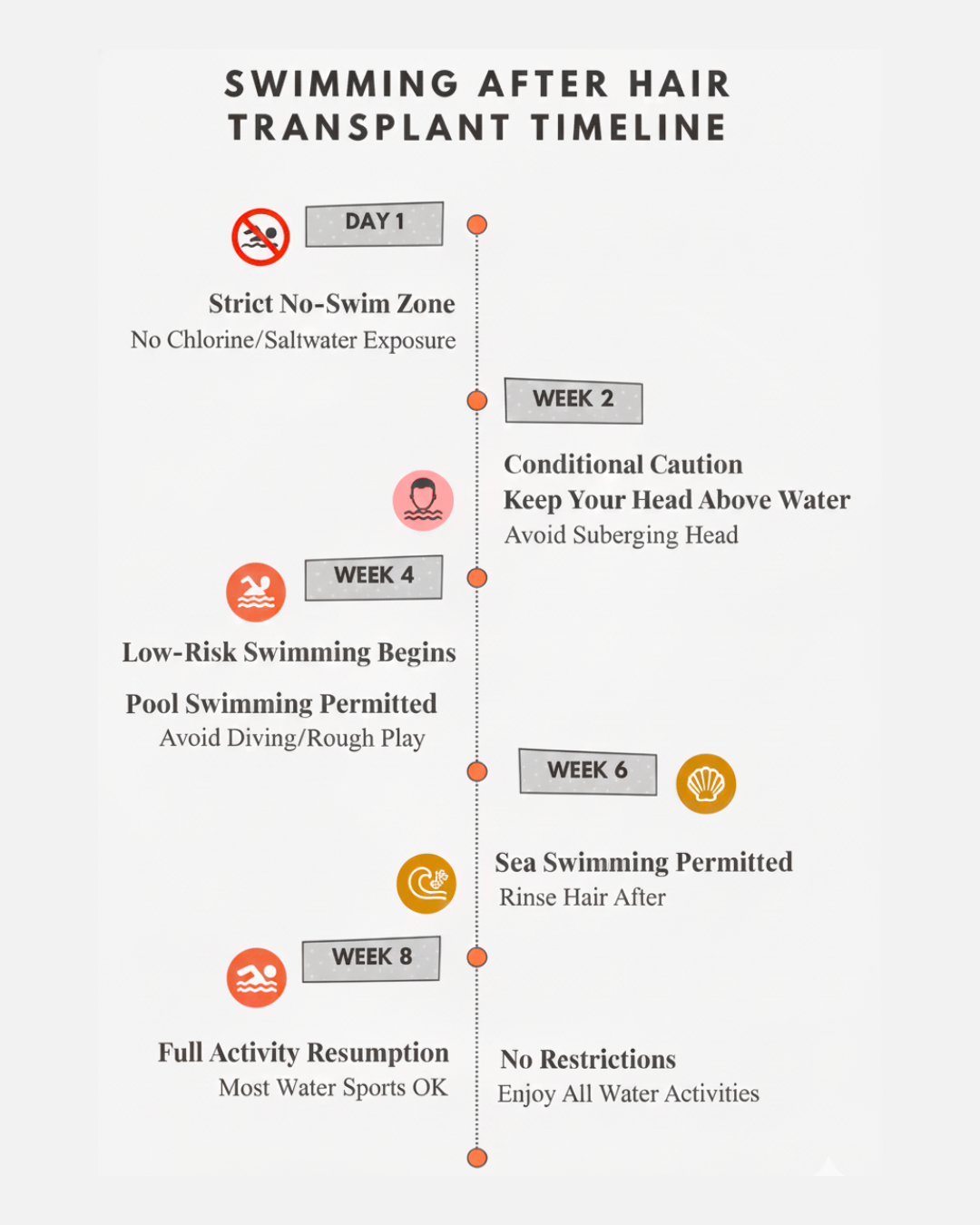
First 7 Days: Strictly Avoid Swimming
- Grafts are not yet anchored
- Even mild water pressure can dislodge follicles
- Risk of infection is high
Swimming should be completely avoided
7 to 14 Days: Still Not Recommended
- Scabs may begin to fall off
- The scalp is still sensitive and healing
Swimming is still unsafe during this phase
14 to 21 Days: With Caution and Doctor Approval
- Grafts are more stable
- Risk is reduced but not eliminated
Swim only if your dermatologist confirms proper healing
After 30 Days: Generally Safe
- Grafts are fully secured
- Scalp healing is complete
Swimming is usually safe after one month
Swimming in a Pool After Hair Transplant
Why Swimming Pools Can Be Risky
Swimming pools contain:
- Chlorine and disinfectants
- Shared bacteria
These can:
- Dry out the scalp
- Cause irritation
- Delay healing
Pool Swimming Recommendation
✔ Safe after 3 to 4 weeks with medical approval
Avoid earlier
Always rinse your scalp with clean water after swimming.
Swimming in the Sea After Hair Transplant
Sea water contains salt and microorganisms that can irritate healing skin.
Risks of Sea Swimming
- Salt can dry the scalp
- Open pores may absorb bacteria
- Strong waves can cause friction
Sea Swimming Recommendation
✔ Safe after 4 weeks
Avoid during early recovery
Swimming in Lakes or Rivers After Hair Transplant
Natural water bodies often contain bacteria, parasites, and pollutants.
Recommendation
Avoid lakes and rivers for at least 6 weeks, as they carry the highest infection risk.
Can You Wear a Swimming Cap After Hair Transplant?
In the early healing phase:
- Tight caps can rub against grafts
- Pressure can damage follicles
✔ Use a loose-fitting cap only after 3 to 4 weeks
Avoid tight or silicone caps early on
What Happens If You Swim Too Early After Hair Transplant?
Swimming before proper healing may lead to:
- Permanent graft loss
- Infections or folliculitis
- Patchy or uneven hair growth
- Reduced hair density
Lost grafts do not grow back, making aftercare critical.
Tips to Protect Your Hair Grafts When You Resume Swimming
When you are cleared to swim:
- Avoid diving or vigorous water activity
- Rinse the scalp immediately after swimming
- Use a mild shampoo recommended by your doctor
- Avoid rubbing or scratching the scalp
- Limit prolonged water exposure
Does Swimming Affect Long-Term Hair Transplant Results?
Once the grafts are fully healed:
- Swimming does not affect transplanted hair
- Transplanted hair grows like natural hair
Timing and proper healing are the key factors.
Hair Transplant Aftercare at Desai’s Skin, Hair & Laser Clinic
At Desai’s Skin, Hair & Laser Clinic, patients receive:
- Clear post-procedure instructions
- Regular follow-up visits
- Activity guidelines, including swimming timelines
- Medical supervision throughout recovery
For personalised advice and safe aftercare guidance, To Book a Consultation Contact Us or Call Us Now.
Final Thoughts
Swimming after a hair transplant is safe when done at the right time. Avoiding water activities during the early healing phase protects your grafts and ensures healthy, natural hair growth, Dr. Desai’s Skin, Hair & Laser Clinic.
Waiting a few extra weeks can make a lasting difference in your results.