How Stress Affects Your Hair
Causes, Hair Loss Types, and Solutions
Stress has become a part of modern life—but many people don’t realise how strongly it can affect hair health. If you’ve noticed sudden hair fall, thinning, or patchy hair loss during stressful periods, stress may be a major trigger.
This blog explains how stress affects your hair, Dr. Desai’s Skin, Hair & Laser Clinic the types of hair loss caused by stress, how long it lasts, and what you can do to stop and reverse it.
- Can Stress Really Cause Hair Loss?
- Types of Hair Loss Caused by Stress
- How Stress Disrupts the Hair Growth Cycle
- Signs Your Hair Loss May Be Stress-Related
- How Long Does Stress-Related Hair Loss Last?
- Can Stress Cause Permanent Hair Loss?
- How to Stop Hair Loss Caused by Stress
- When Should You See a Dermatologist?
- Stress-Related Hair Loss Care at Desai’s Skin, Hair & Laser Clinic
- Final Thoughts of How Stress Affects Your Hair
Can Stress Really Cause Hair Loss?
Yes. Stress can directly and indirectly cause hair loss by disturbing the normal hair growth cycle and triggering hormonal and inflammatory responses in the body.
Under stress, the body prioritises survival functions, diverting nutrients and energy away from hair growth. This can push hair follicles into a resting or shedding phase.
Types of Hair Loss Caused by Stress
Telogen Effluvium (Stress-Related Hair Shedding)
This is the most common type of stress-related hair loss.
What happens
- Stress pushes a large number of hair follicles into the resting (telogen) phase
- Hair shedding increases 2–3 months after the stressful event
Symptoms
- Sudden, excessive hair fall
- Hair loss while washing or combing
- No bald patches
Telogen effluvium is usually temporary if stress is managed.
Alopecia Areata (Stress-Triggered Autoimmune Hair Loss)
Severe emotional stress can trigger autoimmune responses in some people.
Symptoms
- Sudden round or oval bald patches
- Hair loss on scalp, beard, or eyebrows
This condition requires medical treatment and early intervention.
Trichotillomania (Stress-Induced Hair Pulling)
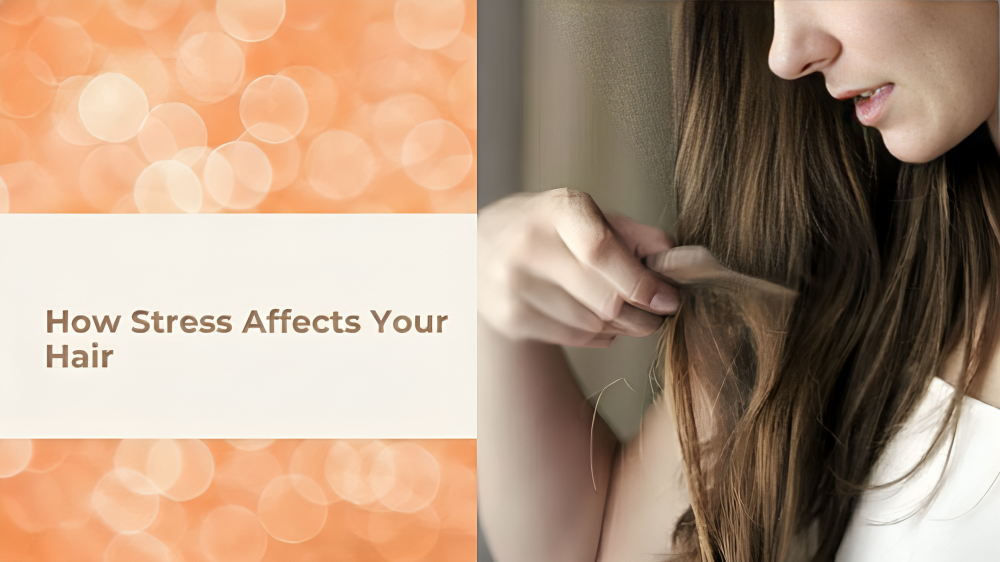
Chronic stress and anxiety can lead to compulsive hair pulling.
Symptoms
- Broken hairs
- Uneven hair loss
- Thinning in easily reachable areas
Psychological support plays an important role in treatment.
How Stress Disrupts the Hair Growth Cycle
Hair grows in three stages:
- Anagen (growth phase)
- Catagen (transition phase)
- Telogen (resting phase)
Stress shortens the growth phase and pushes more hair into the shedding phase, leading to visible hair fall.
Signs Your Hair Loss May Be Stress-Related
- Sudden increase in hair fall
- Hair thinning after illness, exams, job pressure, or emotional trauma
- No family history of baldness
- Hair loss spread evenly across the scalp
A dermatologist can confirm the cause through examination and tests.
How Long Does Stress-Related Hair Loss Last?
- Hair fall usually starts 2–3 months after stress
- Shedding may last 3–6 months
- Hair regrowth begins once stress levels reduce
With proper care, most people see recovery within 6–9 months.
Can Stress Cause Permanent Hair Loss?
Stress alone usually does not cause permanent hair loss. However:
- Chronic stress can worsen genetic hair loss
- Untreated medical conditions may lead to long-term thinning
- Repeated stress episodes can slow regrowth
Early management prevents long-term damage.
How to Stop Hair Loss Caused by Stress
Manage Stress Levels
- Improve sleep quality
- Practice relaxation techniques
- Reduce workload where possible
- Regular physical activity
Stress management is essential for hair recovery.
Maintain Proper Nutrition
Stress often leads to poor eating habits, affecting hair health.
Include:
- Protein-rich foods
- Iron and zinc
- Vitamins and minerals
Nutritional deficiencies can worsen hair fall.
Gentle Hair Care
- Avoid tight hairstyles
- Minimise heat styling
- Use mild shampoos
- Avoid excessive brushing
Harsh hair practices increase breakage during shedding phases.
Medical Treatment When Needed
If hair fall continues:
- Topical treatments may be advised
- Blood tests may be required
- Underlying conditions should be treated
Early consultation improves outcomes.
When Should You See a Dermatologist?
Consult a dermatologist if:
- Hair fall lasts more than 3 months
- You notice bald patches
- Hair fall is severe or sudden
- Hair thinning continues despite stress reduction
Professional evaluation helps identify the exact cause.
Stress-Related Hair Loss Care at Desai’s Skin, Hair & Laser Clinic
At Desai’s Skin, Hair & Laser Clinic, hair loss treatment focuses on:
- Identifying stress-related triggers
- Detailed scalp and hair analysis
- Nutritional and lifestyle guidance
- Medical treatment when required
- Long-term hair health planning
If you’re experiencing stress-related hair fall, To Book a Consultation Contact Us or Call Us Now.
Final Thoughts of How Stress Affects Your Hair
Stress can significantly affect hair health, but the good news is that stress-related hair loss is often reversible. Dr. Desai’s Skin, Hair & Laser Clinic Understanding the signs early, managing stress, and getting the right treatment can restore hair growth and prevent future thinning.
Healthy hair starts with a healthy mind and body.