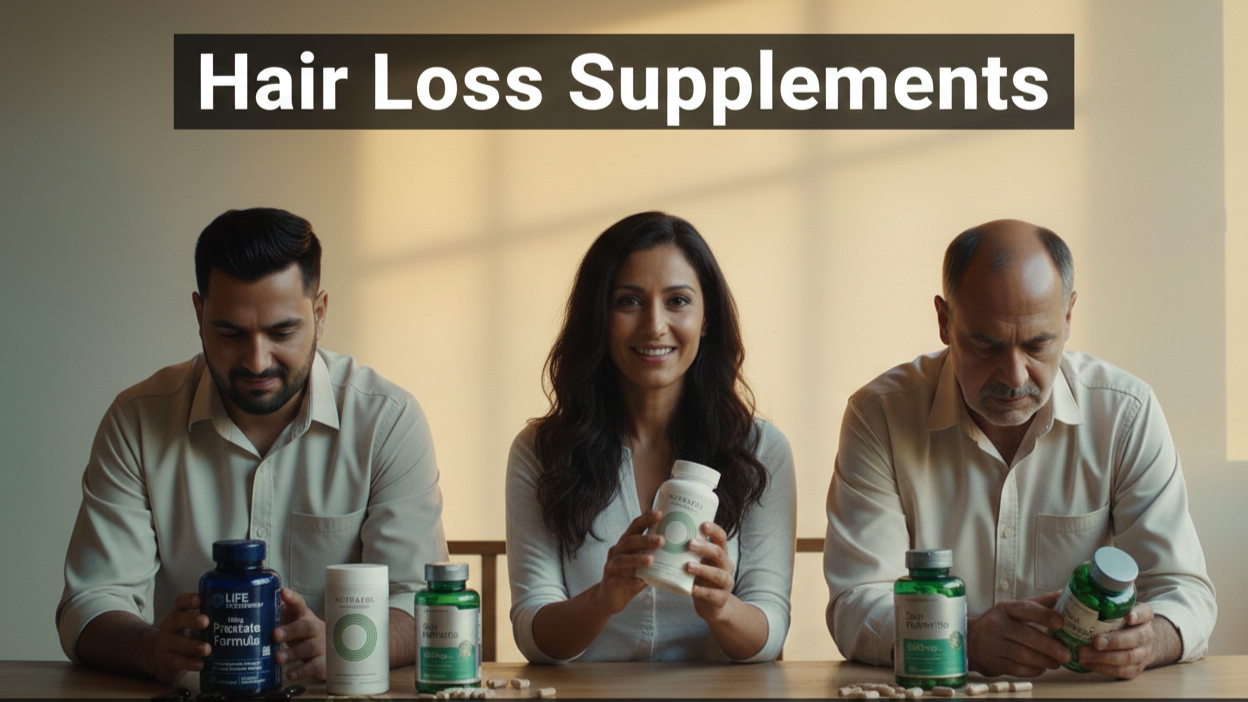
Hair Loss Supplements
How Effective Are They Really?
Hair loss supplements are everywhere today—capsules, gummies, powders, and liquids claiming to stop hair fall and regrow hair. Many people turn to supplements hoping for an easy solution, but an important question remains:
How effective are hair loss supplements really?
This blog explains what hair loss supplements can and cannot do, who benefits from them, common ingredients, and when medical treatment is actually required.
- What Are Hair Loss Supplements?
- Common Ingredients in Hair Loss Supplements
- Do Hair Loss Supplements Really Work?
- How Long Do Hair Loss Supplements Take to Show Results?
- Can Hair Loss Supplements Cause Side Effects?
- Should You Take Hair Loss Supplements Without Testing?
- Supplements vs Medical Hair Loss Treatments
- How to Choose the Right Hair Loss Supplement
- When to See a Dermatologist for Hair Loss
- Hair Loss Treatment at Desai’s Skin, Hair & Laser Clinic
- Final Thoughts
What Are Hair Loss Supplements?
Hair loss supplements are oral products designed to support hair growth by providing essential nutrients required for healthy hair follicles. They are not medicines, but nutritional support.
These supplements usually target:
- Hair thinning
- Excessive hair fall
- Weak or brittle hair
- Nutritional deficiencies
They work best when hair loss is linked to a deficiency or lifestyle factor, not genetics alone.
Common Ingredients in Hair Loss Supplements
Biotin
Biotin supports keratin production, which strengthens hair.
- Useful only if biotin deficiency exists
- Excess biotin does not guarantee hair regrowth
Iron
Iron deficiency is a common cause of hair fall, especially in women.
- Low iron can cause excessive shedding
- Supplementation helps only if levels are low
Blood tests are recommended before taking iron.
Zinc
Zinc plays a role in hair follicle repair and growth.
- Deficiency can cause hair thinning
- Overuse may cause side effects
Vitamin D
Low vitamin D levels are linked to hair thinning.
- Supplementation may help if deficient
- Not a standalone solution for baldness
Amino Acids and Proteins
Hair is primarily made of protein.
- Helps improve hair strength
- Does not reverse genetic hair loss
Do Hair Loss Supplements Really Work?
When Supplements Can Help
Hair loss supplements may be effective if:
- Hair fall is caused by nutritional deficiency
- Hair loss is stress-related
- Hair thinning is temporary
- Diet lacks essential nutrients
In these cases, supplements can reduce hair fall and improve hair quality over time.
When Supplements Do NOT Work
Supplements alone are usually ineffective for:
- Male pattern baldness
- Female pattern hair loss
- Advanced hair thinning
- Genetic hair loss
In such cases, supplements may support hair health but cannot stop or reverse the condition on their own.
How Long Do Hair Loss Supplements Take to Show Results?
Hair growth is slow, and supplements require patience.
- Reduced hair fall: 6–8 weeks
- Improved hair texture: 2–3 months
- Visible regrowth (if any): 3–6 months
Consistency is key, but unrealistic expectations should be avoided.
Can Hair Loss Supplements Cause Side Effects?
Yes, especially when taken without guidance.
Possible side effects include:
- Stomach upset
- Acne (with excess biotin)
- Hormonal imbalance
- Liver stress (with overdosing)
More is not always better.
Should You Take Hair Loss Supplements Without Testing?
This is a common mistake.
Hair loss can occur due to:
- Hormonal issues
- Thyroid disorders
- PCOS
- Genetics
- Medical conditions
Without identifying the cause, supplements may delay proper treatment.
Supplements vs Medical Hair Loss Treatments
Supplements
- Support overall hair health
- Helpful for deficiencies
- Slow and limited impact
Medical Treatments
- Target the root cause
- Clinically proven for pattern hair loss
- Offer better long-term results
The best approach often combines medical treatment + supplements + lifestyle correction.
How to Choose the Right Hair Loss Supplement
Before choosing:
- Avoid “miracle” claims
- Look for clinically relevant ingredients
- Do not mix multiple supplements
- Prefer doctor-recommended products
Personalised advice gives better results than online trends.
When to See a Dermatologist for Hair Loss
Consult a dermatologist if:
- Hair fall lasts more than 3 months
- You notice thinning or widening parting
- Supplements are not helping
- Hair loss is sudden or severe
Early diagnosis prevents permanent damage.
Hair Loss Treatment at Desai’s Skin, Hair & Laser Clinic
At Desai’s Skin, Hair & Laser Clinic, hair loss management focuses on:
- Identifying the exact cause of hair fall
- Blood tests when required
- Evidence-based medical treatments
- Nutritional and lifestyle guidance
- Honest advice on supplements
If you’re unsure whether supplements are right for you, To Book a Consultation Contact Us or Call Us Now.
Final Thoughts
Hair loss supplements can help—but only in the right situations. Dr. Desai’s Skin, Hair & Laser Clinic they are supportive tools, not miracle cures. Understanding the cause of hair loss is far more important than choosing the most popular supplement.
For lasting results, focus on proper diagnosis, consistent care, and realistic expectations.