Fungal vs Bacterial Scalp Infections
Key Differences, Symptoms, and Treatment
Scalp infections are common and often confusing. Many people experience itching, flakes, redness, pain, or hair fall and assume it’s dandruff or dryness. Dr. Desai’s Skin, Hair & Laser Clinic In reality, scalp infections are usually caused by fungal or bacterial organisms, and each requires a very different treatment approach .
This blog explains the difference between fungal and bacterial scalp infections, their symptoms, causes, diagnosis, and the right way to treat them.
- What Is a Scalp Infection?
- What Is a Fungal Scalp Infection?
- What Is a Bacterial Scalp Infection?
- Key Differences Between Fungal and Bacterial Scalp Infections
- Why Correct Diagnosis Is Important
- How Are Scalp Infections Diagnosed?
- Treatment for Fungal Scalp Infections
- Treatment for Bacterial Scalp Infections
- Can Scalp Infections Cause Hair Loss?
- How to Prevent Scalp Infections
- Scalp Infection Treatment at Desai’s Skin, Hair & Laser Clinic
- Final Thoughts about Fungal vs Bacterial Scalp Infections
What Is a Scalp Infection?
A scalp infection occurs when microorganisms invade the skin or hair follicles of the scalp. These infections can cause:
- Itching and irritation
- Scaling or crusting
- Redness or swelling
- Painful bumps
- Hair fall or patchy hair loss
Identifying the type of infection early prevents complications and hair damage.
What Is a Fungal Scalp Infection?
Fungal scalp infections are caused by fungi that thrive in warm, moist environments.
Common Types of Fungal Scalp Infections
- Tinea capitis (scalp ringworm)
- Seborrheic dermatitis (yeast-related)
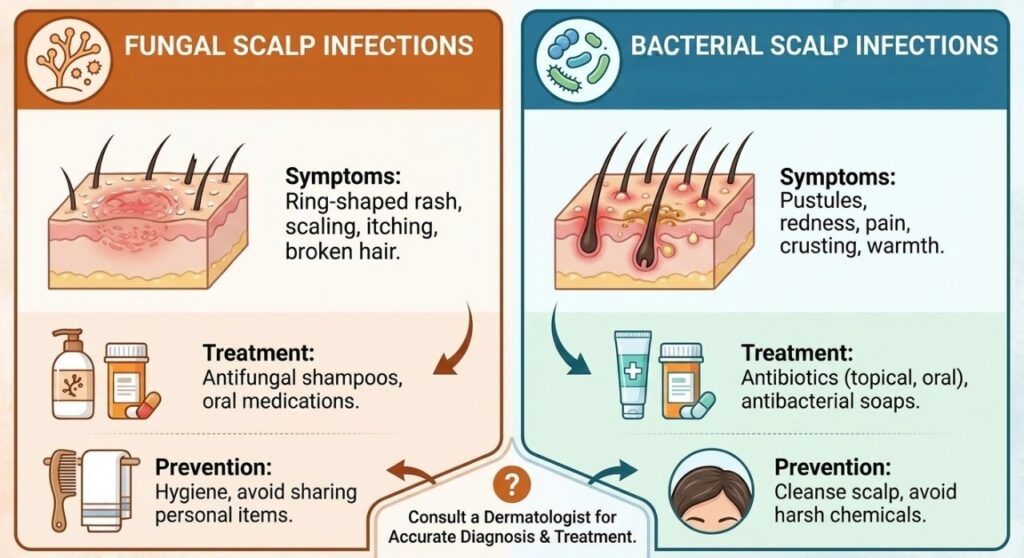
Symptoms of Fungal Scalp Infection
- Persistent itching
- White or yellow flaky scales
- Red patches on scalp
- Circular bald patches (in some cases)
- Brittle or broken hair
Fungal infections often worsen with oily scalp, sweating, or poor hygiene.
Causes of Fungal Scalp Infections
- Excessive sweating
- Sharing combs, towels, helmets
- Oily scalp
- Weakened immunity
What Is a Bacterial Scalp Infection?
Bacterial scalp infections occur when bacteria enter hair follicles or damaged skin.
Common Types of Bacterial Scalp Infections
- Folliculitis
- Furuncles (boils)
- Carbuncles
Symptoms of Bacterial Scalp Infection
- Painful red bumps
- Pus-filled lesions
- Swelling and tenderness
- Crusting or oozing
- Fever (in severe cases)
Bacterial infections tend to be painful rather than itchy.
Causes of Bacterial Scalp Infections
- Scratching or skin injury
- Poor scalp hygiene
- Shaving or friction
- Existing skin conditions
Key Differences Between Fungal and Bacterial Scalp Infections
Nature of Symptoms
- Fungal: Itching, scaling, hair breakage
- Bacterial: Pain, pus, swelling
Appearance
- Fungal: Dry or greasy flakes, patches
- Bacterial: Red boils or pustules
Hair Loss
- Fungal: Patchy hair loss may occur
- Bacterial: Temporary hair loss due to inflammation
Spread
- Fungal: Can spread through contact
- Bacterial: Usually localized
Why Correct Diagnosis Is Important
Using the wrong treatment can make the condition worse.
- Antifungal medicines do not treat bacteria
- Antibiotics do not kill fungi
- Steroid creams can worsen infections
Proper diagnosis ensures faster relief and prevents recurrence.
How Are Scalp Infections Diagnosed?
Diagnosis may include:
- Clinical scalp examination
- Dermatoscopic evaluation
- Microscopic tests or cultures (if required)
Early diagnosis reduces hair damage and scarring.
Treatment for Fungal Scalp Infections
Common Treatments
- Antifungal shampoos
- Oral antifungal medications (if severe)
- Scalp hygiene guidance
Treatment usually lasts several weeks and must be completed fully.
Treatment for Bacterial Scalp Infections
Common Treatments
- Topical antibiotics
- Oral antibiotics for deeper infections
- Antiseptic scalp cleansers
Avoid squeezing or scratching lesions, as this spreads infection.
Can Scalp Infections Cause Hair Loss?
Yes, especially if untreated.
- Fungal infections may cause temporary or patchy hair loss
- Severe bacterial infections can damage follicles
Early treatment usually allows full hair regrowth.
How to Prevent Scalp Infections
- Keep scalp clean and dry
- Avoid sharing personal hair items
- Treat dandruff or scalp conditions early
- Avoid excessive scratching
- Maintain good immunity
Prevention is easier than treatment.
Scalp Infection Treatment at Desai’s Skin, Hair & Laser Clinic
At Desai’s Skin, Hair & Laser Clinic, scalp infections are treated with:
- Accurate diagnosis
- Condition-specific medications
- Scalp care guidance
- Monitoring to prevent recurrence
If you’re experiencing persistent itching, pain, or scalp lesions, To Book a Consultation Contact Us or Call Us Now.
Final Thoughts about Fungal vs Bacterial Scalp Infections
Fungal and bacterial scalp infections may look similar but require very different treatments. Treating the scalp without knowing the exact cause can delay healing and worsen hair problems. Dr. Desai’s Skin, Hair & Laser Clinic Early diagnosis and targeted treatment ensure faster recovery and protect long-term hair health.