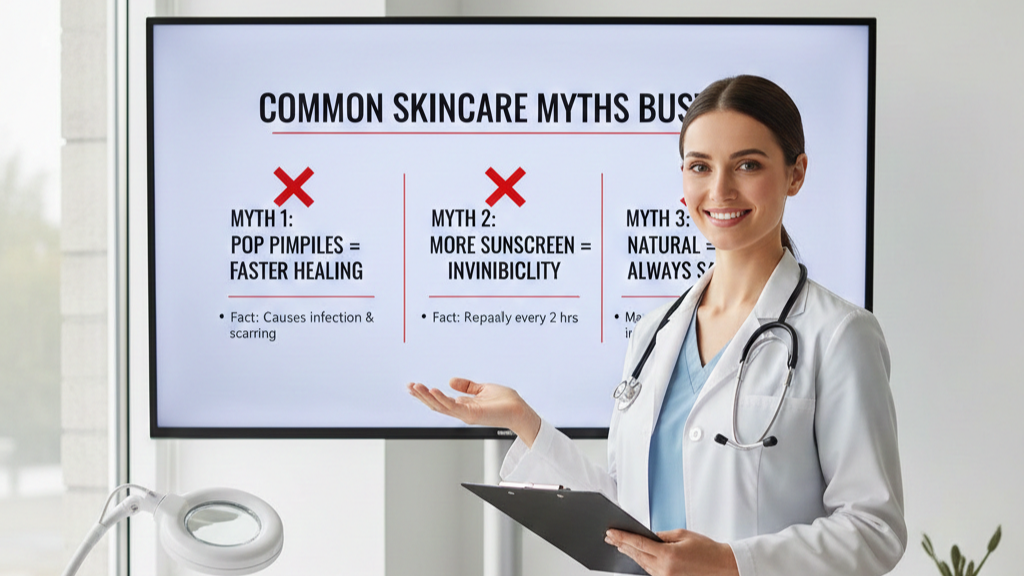
Common Skincare Myths Busted by a Dermatologist
With so much skincare advice on social media, it’s easy to get confused about what actually works and what doesn’t. From DIY hacks to viral trends, many skincare myths can do more harm than good if followed blindly.
In this blog, Dr. Desai’s Skin, Hair & Laser Clinic we bust some of the most common skincare myths and explain the truth behind them, based on dermatological knowledge and clinical experience.
- Myth 1: Oily Skin Doesn’t Need Moisturizer
- Myth 2: The More Products You Use, the Better Your Skin Will Be
- Myth 3: Natural or Homemade Products Are Always Safe
- Myth 4: Sunscreen Is Not Needed Indoors or in Winter
- Myth 5: Acne Is Only a Teenage Problem
- Myth 6: Popping Pimples Makes Them Heal Faster
- Myth 7: Expensive Skincare Products Work Better
- Myth 8: Fairness Creams Can Permanently Change Skin Color
- Myth 9: Scrubbing Hard Gives Clearer Skin
- Myth 10: You Don’t Need a Dermatologist Unless There’s a Serious Problem
- Why Following Skincare Myths Can Harm Your Skin
- Common Skincare Myths Busted FAQs
- Conclusion of Common Skincare Myths Busted
Myth 1: Oily Skin Doesn’t Need Moisturizer
Truth:
Even oily skin needs moisturizer.
When you skip moisturizer, your skin compensates by producing even more oil, which can lead to clogged pores and acne. The key is choosing the right type of moisturizer.
- Use lightweight, gel-based, or non-comedogenic moisturizers
- Avoid heavy, greasy creams if you have oily skin
Myth 2: The More Products You Use, the Better Your Skin Will Be
Truth:
Using too many products can damage your skin barrier.
Overloading your skin with multiple active ingredients can cause irritation, redness, breakouts, and sensitivity. A simple, consistent routine works best.
A basic routine includes:
- Cleanser
- Moisturizer
- Sunscreen
- Targeted treatment if needed
Myth 3: Natural or Homemade Products Are Always Safe
Truth:
Natural doesn’t always mean safe for your skin.
Ingredients like lemon, baking soda, toothpaste, and raw essential oils can cause burns, pigmentation, or allergic reactions. Just because something is natural does not mean it is suitable for facial skin.
Dermatologist-tested products are safer and more reliable.
Myth 4: Sunscreen Is Not Needed Indoors or in Winter
Truth:
UV rays are present all year round, even indoors.
UVA rays can penetrate windows and cause:
- Premature aging
- Pigmentation
- Skin damage
Using a broad-spectrum sunscreen daily is essential, regardless of weather or indoor exposure.
Myth 5: Acne Is Only a Teenage Problem
Truth:
Adult acne is very common.
Hormonal imbalance, stress, lifestyle factors, and certain medications can cause acne well into adulthood, especially in women. Adult acne often appears on the jawline and chin.
Proper diagnosis is important for effective treatment.
Myth 6: Popping Pimples Makes Them Heal Faster
Truth:
Popping pimples can worsen acne.
Squeezing pimples pushes bacteria deeper into the skin, increasing inflammation and leading to:
- Acne scars
- Dark spots
- Infection
It’s always better to treat acne with proper medication or professional care.
Myth 7: Expensive Skincare Products Work Better
Truth:
Price does not determine effectiveness.
A product’s formulation and ingredients matter more than the brand name or price tag. Many affordable products work just as well as luxury skincare when used correctly.
Myth 8: Fairness Creams Can Permanently Change Skin Color
Truth:
No cream can change your natural skin tone permanently.
Fairness creams may temporarily brighten the skin by reducing tanning or pigmentation, but they cannot alter your genetic skin color. Some unregulated products may even damage the skin.
Myth 9: Scrubbing Hard Gives Clearer Skin
Truth:
Over-scrubbing damages the skin barrier.
Harsh scrubs can cause micro-tears, irritation, and increased oil production. Gentle exfoliation once or twice a week is sufficient for most skin types.
Myth 10: You Don’t Need a Dermatologist Unless There’s a Serious Problem
Truth:
Early consultation prevents long-term damage.
Seeing a dermatologist early helps:
- Treat skin issues effectively
- Prevent scarring and pigmentation
- Get personalized skincare advice
Professional guidance saves time, money, and skin health in the long run.
Why Following Skincare Myths Can Harm Your Skin
Believing skincare myths can lead to:
- Chronic acne
- Pigmentation
- Sensitive or damaged skin
- Premature aging
Correct information and professional advice are key to healthy skin.
Common Skincare Myths Busted FAQs
How can I know if skincare advice is reliable?
Always check if it is backed by dermatologists or scientific research.
Is it okay to follow skincare trends online?
Some trends may help, but many are not suitable for all skin types.
How often should I change my skincare routine?
Stick to a routine for at least 6–8 weeks before expecting results.
Can wrong skincare cause permanent damage?
Yes, misuse of products can cause long-term pigmentation or sensitivity.
Is dermatologist-recommended skincare better?
Yes, it is safer and tailored to your specific skin concerns.
Conclusion of Common Skincare Myths Busted
Skincare myths can mislead and damage your skin if followed without understanding the facts. Healthy skin doesn’t come from trends or shortcuts—it comes from science-backed care, consistency, and professional guidance. Dr. Desai’s Skin, Hair & Laser Clinic Clinic Knowing the truth behind these myths helps you make better skincare choices and protect your skin in the long run.