What Causes Hair Thinning? 8 Common Reasons You Should Know
Hair thinning is a common problem that affects both men and women at different stages of life. Unlike sudden hair fall, thinning happens gradually and often goes unnoticed until the scalp becomes more visible or hair volume reduces significantly.
Understanding the cause of hair thinning is the first step toward effective treatment in Dr. Desai’s Skin, Hair & Laser Clinic. Below are the 8 most common reasons for hair thinning and what you can do about them.
- 1. Genetics (Hereditary)
- 2. Hormonal Imbalance
- 3. Nutritional Deficiencies
- 4. Stress and Lifestyle Factors
- 5. Excessive Styling and Heat Damage
- 6. Scalp Conditions
- 7. Medical Conditions and Medications
- 8. Aging
- When Should You See a Hair Specialist?
- Treatment Options for Hair Thinning
- Tips to Prevent IT
- Hair Thinning FAQs
- Conclusion
1. Genetics (Hereditary)
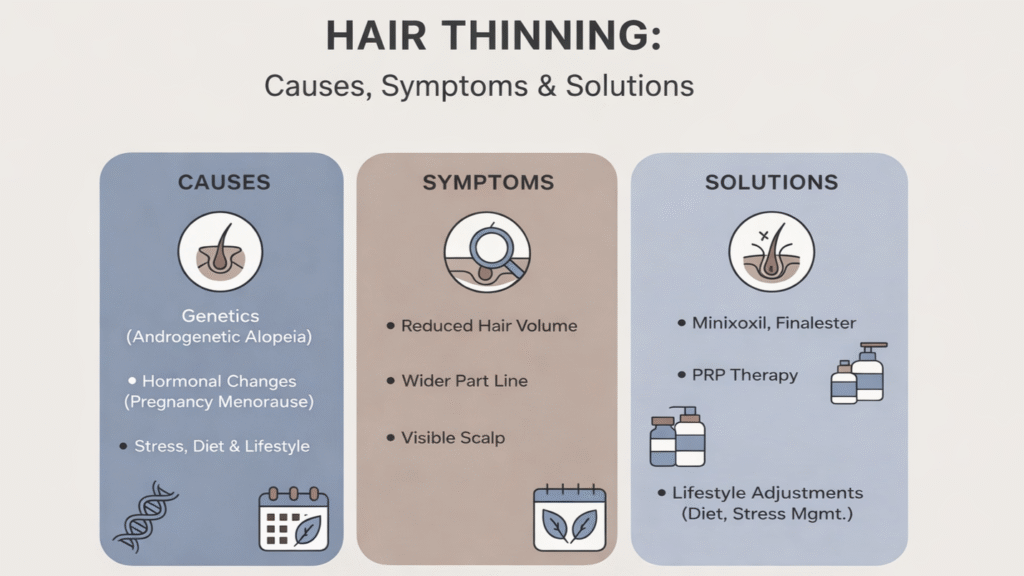
Genetics is the most common cause of hair thinning. If hair thinning runs in your family, you may notice gradual reduction in hair density over time.
- In men, it usually affects the hairline and crown
- In women, it causes overall thinning, especially on the top of the scalp
This condition is known as androgenetic alopecia.
2. Hormonal Imbalance
Hormonal changes can significantly affect hair growth. Common triggers include:
- Thyroid disorders
- Polycystic ovary syndrome (PCOS)
- Pregnancy and postpartum changes
- Menopause
Hormonal imbalance shortens the hair growth phase, leading to thinner and weaker hair strands.
3. Nutritional Deficiencies
Hair needs proper nutrients to grow. Deficiency in essential nutrients can lead to thinning.
Common deficiencies include:
- Iron
- Protein
- Vitamin D
- Vitamin B12
- Zinc
Crash dieting and poor eating habits often worsen.
4. Stress and Lifestyle Factors
Chronic stress affects the hair growth cycle and can push more hair into the shedding phase, a condition known as telogen effluvium.
Other lifestyle factors include:
- Poor sleep
- Smoking
- Excessive alcohol consumption
- Lack of physical activity
Stress-related thinning is usually reversible with proper care.
5. Excessive Styling and Heat Damage
Frequent use of:
- Hair straighteners
- Curling irons
- Blow dryers
- Tight hairstyles
can weaken hair shafts and cause breakage, making hair appear thin over time.
6. Scalp Conditions
An unhealthy scalp directly affects hair growth.
Common scalp issues include:
- Dandruff
- Fungal infections
- Psoriasis
- Seborrheic dermatitis
Inflammation and clogged follicles reduce hair thickness and slow regrowth.
7. Medical Conditions and Medications
Certain medical conditions and treatments can cause it:
- Autoimmune disorders
- Diabetes
- Chemotherapy
- Long-term use of specific medications
Due to medical causes should always be evaluated by a specialist.
8. Aging
As you age, hair growth naturally slows down. Hair follicles shrink, and strands become finer, leading to visible thinning.
While aging cannot be stopped, proper care can slow the process.
When Should You See a Hair Specialist?
Consult a hair specialist if:
- Progressing rapidly
- You notice increased scalp visibility
- Accompanied by itching or redness
- Home remedies are not helping
Early diagnosis improves treatment success.
Treatment Options for Hair Thinning
Depending on the cause, treatment may include:
- Topical solutions like minoxidil
- Nutritional supplements
- PRP therapy
- Microneedling
- Medical management of underlying conditions
Personalized treatment gives the best results.
Tips to Prevent IT
- Eat a balanced, protein-rich diet
- Avoid harsh chemical treatments
- Reduce stress and improve sleep
- Use gentle hair care products
- Treat scalp issues early
Hair Thinning FAQs
Is hair thinning reversible?
Yes, Caused by stress, nutrition, or scalp conditions is often reversible with proper treatment.
How is hair thinning different from hair loss?
Is gradual reduction in volume, while hair loss refers to excessive shedding or bald patches.
Can hair thinning affect young people?
Yes, Can start as early as the 20s due to genetics, stress, or hormonal issues.
Does hair thinning always lead to baldness?
Not always. Early treatment can slow or stop progression.
Can women experience hair thinning?
Yes, Is very common in women, especially due to hormonal changes.
Conclusion
Hair thinning can be caused by multiple factors, including genetics, hormones, lifestyle, and scalp health in Dr. Desai’s Skin, Hair & Laser Clinic Identifying the root cause early allows for better control and effective treatment. With proper care, lifestyle changes, and professional guidance, hair thinning can be managed and even reversed in many cases.