Can Smoking Cause Hair Loss?
Hair loss is a common concern among men and women, and while genetics and hormones are often blamed, lifestyle habits also play a major role. One such habit is smoking. Many people are unaware that smoking can directly and indirectly damage hair health.
If you smoke and are experiencing thinning hair, excessive hair fall, or early balding, this guide explains how smoking causes hair loss, what the science says, and whether the damage can be reversed Dr. Desai’s Skin, Hair & Laser Clinic.
- How Smoking Affects Hair Health
- Scientific Evidence Linking Smoking and Hair Loss
- Types of Hair Loss Linked to Smoking
- Can Quitting Smoking Reverse Hair Loss?
- Smoking and Hair Treatments
- Tips to Protect Your Hair If You Smoke or Recently Quit
- When to See a Hair Specialist
- Can Smoking Cause Hair Loss FAQs
- Conclusion
How Smoking Affects Hair Health
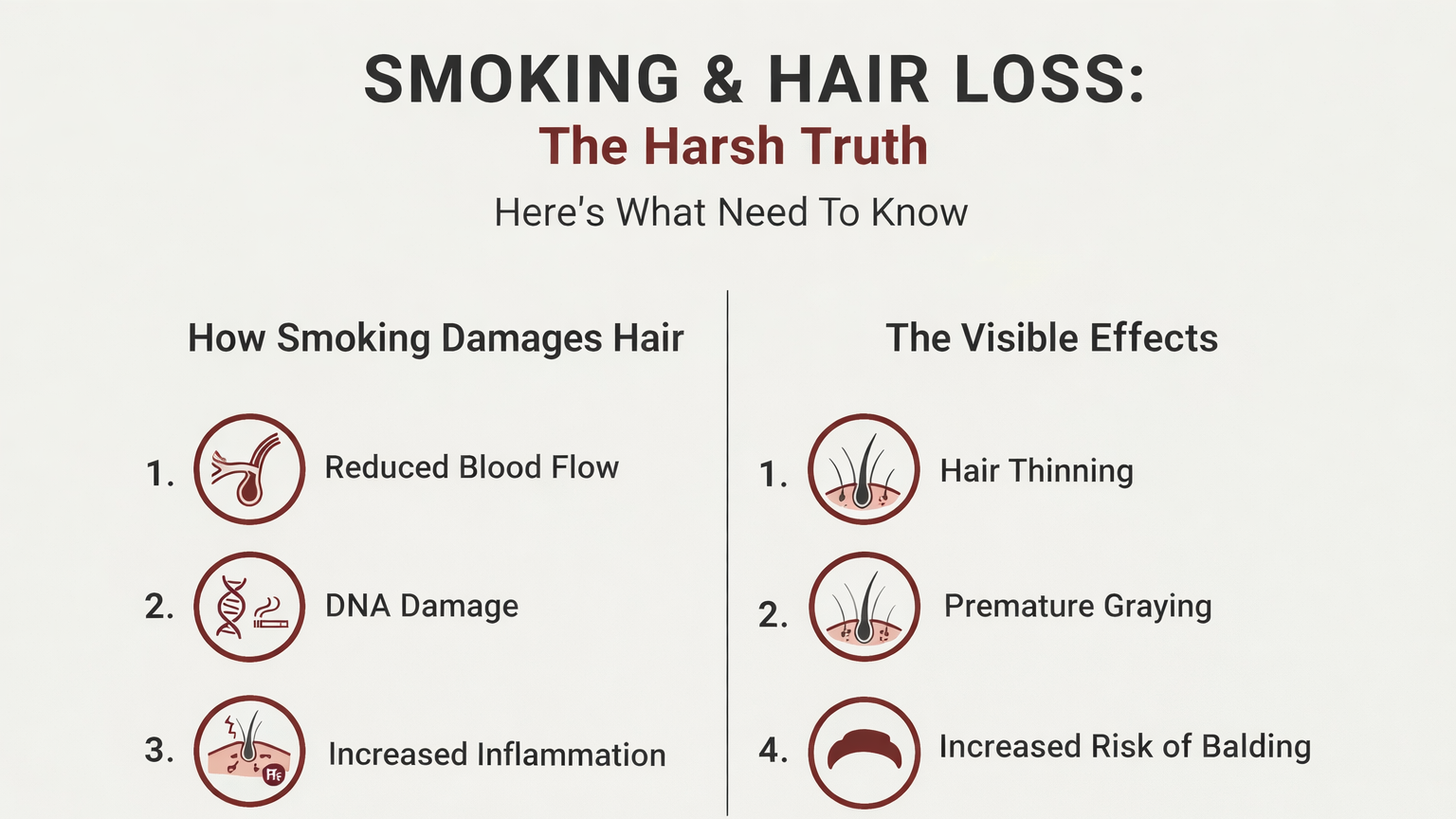
Smoking introduces thousands of harmful chemicals into the body, including nicotine, carbon monoxide, and free radicals. These substances affect hair growth in several ways.
Reduced Blood Flow to Hair Follicles
Nicotine narrows blood vessels, reducing oxygen and nutrient supply to the scalp. Hair follicles that do not receive enough nutrients become weak, leading to thinner hair and increased shedding.
Damage from Free Radicals
Cigarette smoke increases oxidative stress in the body. Free radicals damage hair follicle cells and accelerate aging of the scalp, causing premature hair thinning and greying.
Hormonal Imbalance
Smoking can increase levels of dihydrotestosterone (DHT), a hormone linked to male and female pattern hair loss. Higher DHT levels shrink hair follicles and shorten the hair growth cycle.
Reduced Collagen Production
Collagen is essential for strong hair and healthy scalp skin. Smoking breaks down collagen, weakening hair structure and slowing regrowth.
Scientific Evidence Linking Smoking and Hair Loss
Studies published between 2024 and 2025 show a strong association between smoking and increased risk of androgenetic alopecia. Research has found that smokers are more likely to experience:
- Early onset hair loss
- Faster progression of baldness
- Thinner and weaker hair strands
Heavy smokers are at a significantly higher risk compared to non-smokers.
Types of Hair Loss Linked to Smoking
Androgenetic Alopecia
Smoking accelerates male and female pattern hair loss by increasing DHT levels and reducing blood circulation to follicles.
Telogen Effluvium
Smoking-related stress on the body can push more hair into the shedding phase, leading to sudden and excessive hair fall.
Premature Greying
Oxidative stress from smoking damages melanin-producing cells, causing early greying of hair.
Poor Beard and Body Hair Growth
Smoking also affects facial hair growth, leading to patchy or slow-growing beard hair.
Can Quitting Smoking Reverse Hair Loss?
Quitting smoking improves overall blood circulation and reduces oxidative stress. While it may not completely reverse genetic hair loss, stopping smoking can:
- Slow down further hair loss
- Improve hair thickness and strength
- Enhance results of hair treatments
- Improve scalp health
Hair regrowth depends on how early you quit and whether follicles are still active.
Smoking and Hair Treatments
Smoking can reduce the effectiveness of hair treatments such as:
- Minoxidil
- PRP therapy
- Microneedling
- Hair transplant
Smokers often experience slower healing and weaker results after hair transplant procedures due to poor blood flow and oxygen supply.
Tips to Protect Your Hair If You Smoke or Recently Quit
- Quit smoking or reduce frequency
- Eat a diet rich in protein, iron, and antioxidants
- Stay hydrated
- Use dermatologist-recommended hair products
- Manage stress and sleep well
- Seek professional treatment early
Consulting a hair specialist can help create a treatment plan tailored to your hair loss pattern.
When to See a Hair Specialist
You should consult a specialist if:
- Hair fall is increasing rapidly
- You notice thinning at the crown or hairline
- Hair loss continues despite lifestyle changes
- You are planning advanced treatments like PRP or transplant
Early diagnosis improves treatment success.
Can Smoking Cause Hair Loss FAQs
Does smoking directly cause baldness?
Smoking does not directly cause baldness, but it significantly increases the risk and speeds up hair loss.
Is vaping safer for hair than smoking?
Vaping still exposes the body to nicotine, which can restrict blood flow and negatively affect hair growth.
How long after quitting smoking does hair improve?
Improved hair quality may be noticed within 3–6 months after quitting, depending on individual health.
Does occasional smoking cause hair loss?
Even occasional smoking can affect circulation and scalp health over time, though heavy smoking has a stronger impact.
Can women experience hair loss due to smoking?
Yes, smoking affects hair health in both men and women and can worsen female pattern hair loss.
Conclusion
Smoking has a clear negative impact on hair health. It restricts blood flow, damages hair follicles, disrupts hormones, and accelerates hair loss and greying. While quitting smoking may not reverse all hair loss, it significantly slows progression and improves the effectiveness of hair treatments Dr. Desai’s Skin, Hair & Laser Clinic. Protecting your hair starts with making healthier lifestyle choices and seeking professional guidance early.