Hair Transplant Recovery Tips
Faster Healing and Better Results:
A hair transplant doesn’t end when the procedure is complete. In fact, the recovery phase plays a major role in how successful your final results will be. Even the best hair transplant can deliver poor outcomes if aftercare is ignored.
If you want faster healing, better graft survival, and natural-looking hair growth, following the right recovery practices is essential. This guide shares practical, medically safe hair transplant recovery tips to help you heal properly and get the best possible results in 2025.
- Why Hair Transplant Recovery Is So Important
- Best Hair Transplant Recovery Tips for Faster Healing
- Activities to Avoid During Hair Transplant Recovery
- Common Recovery Myths You Should Ignore
- How to Know If Healing Is Going Well
- Hair Transplant Recovery Timeline
- Hair Transplant Aftercare at Desai’s Skin, Hair & Laser Clinic
- Final Thoughts
Why Hair Transplant Recovery Is So Important
After a hair transplant:
- Newly implanted grafts are fragile
- Blood supply is still forming
- The scalp is sensitive and healing
Improper care can lead to:
- Graft loss
- Infections
- Delayed hair growth
- Patchy or uneven results
Good recovery habits protect your investment and improve long-term success.
Best Hair Transplant Recovery Tips for Faster Healing
Follow Washing Instructions Exactly
Washing incorrectly is one of the most common mistakes.
Do
- Use only the shampoo recommended by your doctor
- Wash gently with fingertips
- Let water flow softly over the scalp
Avoid
- Strong water pressure
- Scratching scabs
- Using regular shampoos early
Sleep in the Right Position
For the first 7–10 days:
- Sleep on your back
- Keep your head elevated with pillows
This reduces swelling and prevents accidental graft damage.
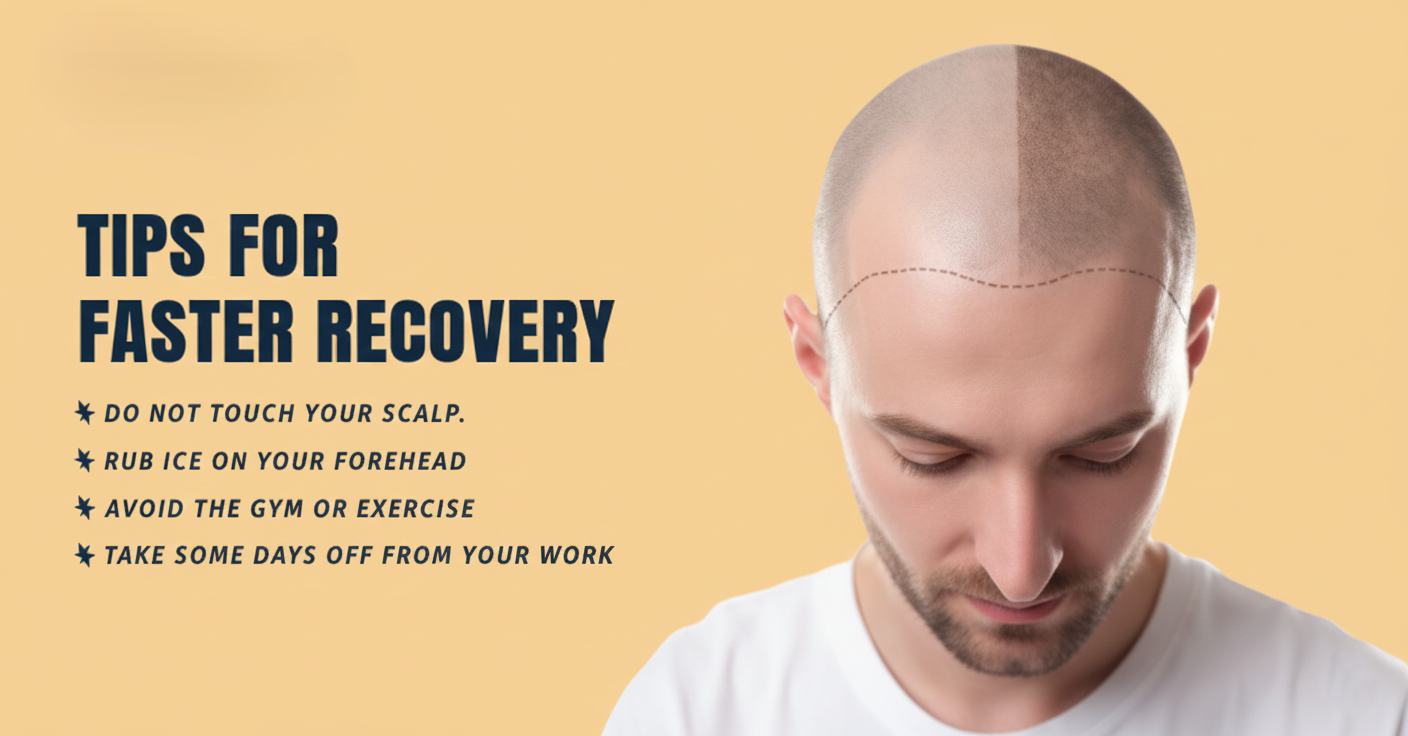
Avoid Touching, Scratching, or Rubbing
Even if itching occurs:
- Do not scratch
- Do not rub with towels
- Do not massage the transplanted area
Touching grafts early can dislodge them permanently.
Stay Away from Sun and Heat
Heat and UV exposure can irritate the scalp.
- Avoid direct sunlight for at least 3–4 weeks
- Avoid saunas, steam rooms, and hot showers
If you must go out, wear a loose cap only after doctor approval.
Avoid Smoking and Alcohol
Smoking reduces blood flow and oxygen supply to grafts.
Alcohol can increase swelling and delay healing.
For best results:
- Avoid smoking for at least 2 weeks
- Avoid alcohol for at least 7–10 days
Eat for Faster Hair Transplant Recovery
Good nutrition speeds healing.
Include:
- Protein-rich foods
- Fruits and vegetables
- Iron, zinc, and biotin-rich foods
Stay well hydrated to support recovery.
Take Prescribed Medications on Time
Doctors may prescribe:
- Antibiotics
- Pain relievers
- Anti-swelling medication
Take them exactly as instructed and do not self-medicate.
Activities to Avoid During Hair Transplant Recovery
Exercise and Gym
- Avoid heavy workouts for 2–3 weeks
- Light walking is usually allowed
Swimming
- Avoid swimming for at least 3–4 weeks
- Pools, sea, and lakes can cause infections
Hair Styling and Products
- Avoid gels, sprays, oils, and dyes
- Do not use heat tools
Wait until your doctor allows styling products.
Common Recovery Myths You Should Ignore
“Scratching helps scabs fall faster”
False. Scabs must fall naturally.
“Wearing a tight cap protects grafts”
False. Tight caps increase friction.
“More washing speeds healing”
False. Overwashing can damage grafts.
How to Know If Healing Is Going Well
Normal signs:
- Mild redness
- Temporary hair shedding
- Slight itching
Warning signs (seek medical advice):
- Severe pain
- Pus or foul smell
- Excessive swelling
- Fever
Hair Transplant Recovery Timeline
First 1–3 Days: Critical Healing Phase
- Mild pain, swelling, and redness are common
- Grafts are not yet secured
What to do
- Rest properly
- Sleep with your head elevated
- Avoid touching or rubbing the scalp
Days 4–10: Scab Formation and Shedding
- Scabs form and begin to fall naturally
- Transplanted hair may shed (shock loss)
This is normal and temporary.
Weeks 2–4: Grafts Stabilise
- Redness reduces
- Scalp starts looking normal
- Grafts are firmly anchored
Months 3–6: Visible Hair Growth Begins
- New hair starts growing
- Texture may be thin initially
Months 9–12: Final Results
- Hair thickens
- Density improves
- Natural appearance develops
Hair Transplant Aftercare at Desai’s Skin, Hair & Laser Clinic
At Dr. Desai’s Skin, Hair & Laser Clinic, recovery care includes:
- Clear written aftercare instructions
- Regular follow-ups
- Activity and washing timelines
- Guidance for faster, safer healing
For personalised recovery advice, you can book a consultation through our contact page.
Final Thoughts
Hair transplant recovery is not complicated—but it does require discipline. Following the right aftercare steps helps grafts survive, grow well, and look natural. Small mistakes during recovery can affect results permanently.
If you want the best outcome in 2025, focus on proper healing, patience, and consistency.